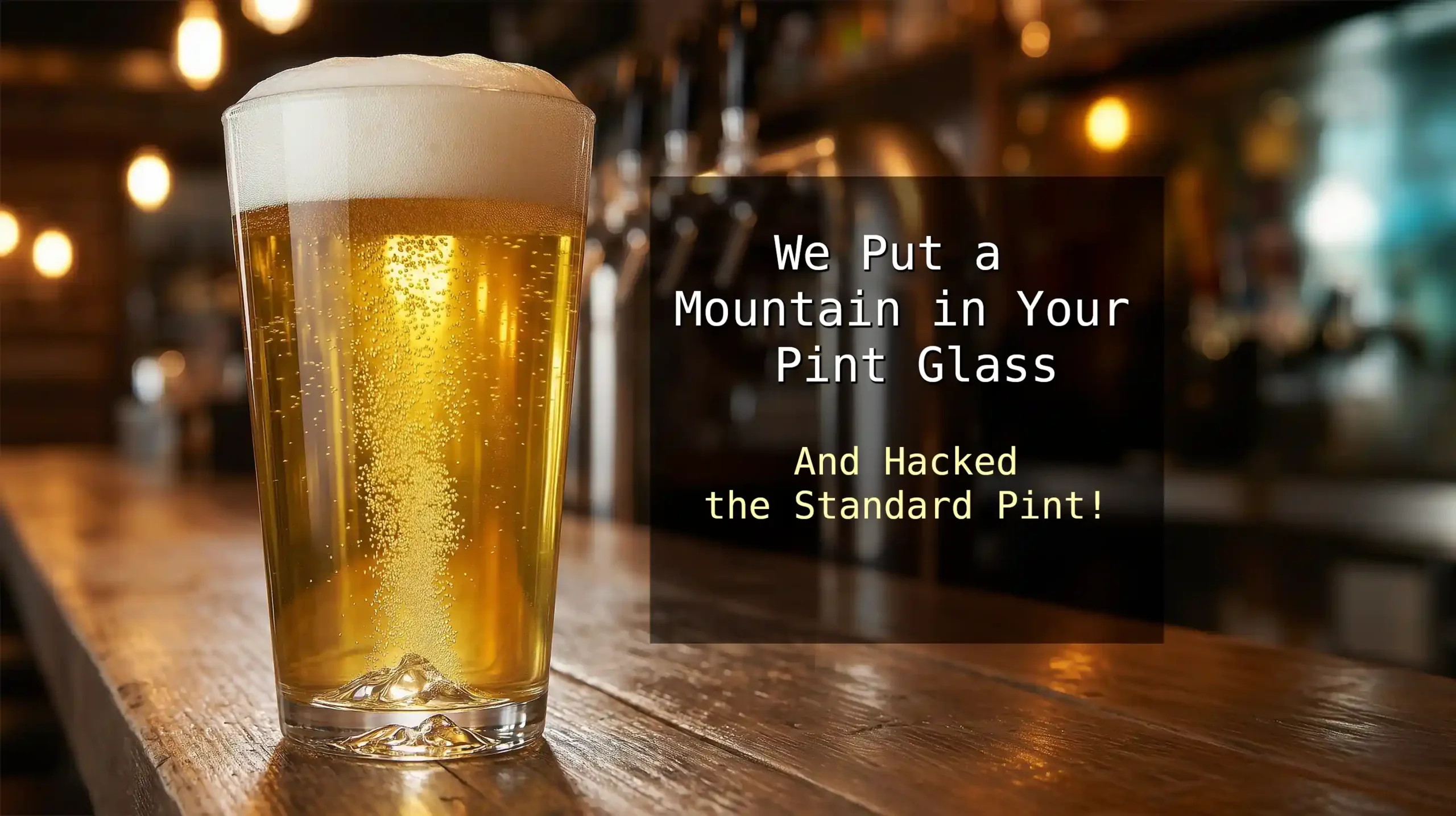
Stop Drinking “Dead” Beer: Why We Put a Mountain in Your Pint Glass
Key Takeaways:
- “Dead Beer” occurs when smooth glass prevents bubbles from rising, killing carbonation and aroma.
- The Solution: We engineered a 3D mountain range into the base of the glass.
- How It Works: The peaks and ridges act as physical nucleation sites, moving carbonation from the bottom to the surface.
- The Verdict: It’s the classic durability of a shaker pint, with a hidden engine for flavor.
You know the feeling. You pour a fresh, cold craft beer. The first sip is perfect, crisp, carbonated, and full of life. But ten minutes later, you look down at your glass. The beer is still cold, but it looks… flat. Still. Lifeless. In the industry, we call this “Dead Beer.”
Most people blame the beer. They think it lost its carbonation too quickly. But 90% of the time, it’s not the brew’s fault. It’s the glass. Specifically, it’s the standard, smooth-bottomed pint glass found in most cabinets. While we love the standard pint as a durable workhorse, it has a hidden flaw when it comes to performance. At Burns Glass, we decided to fix it. We didn’t just scratch the bottom; we put a mountain range in the glass.
Here is the science behind why your beer is dying, and how geology saves the flavor.
The Physics of the Smooth Surface
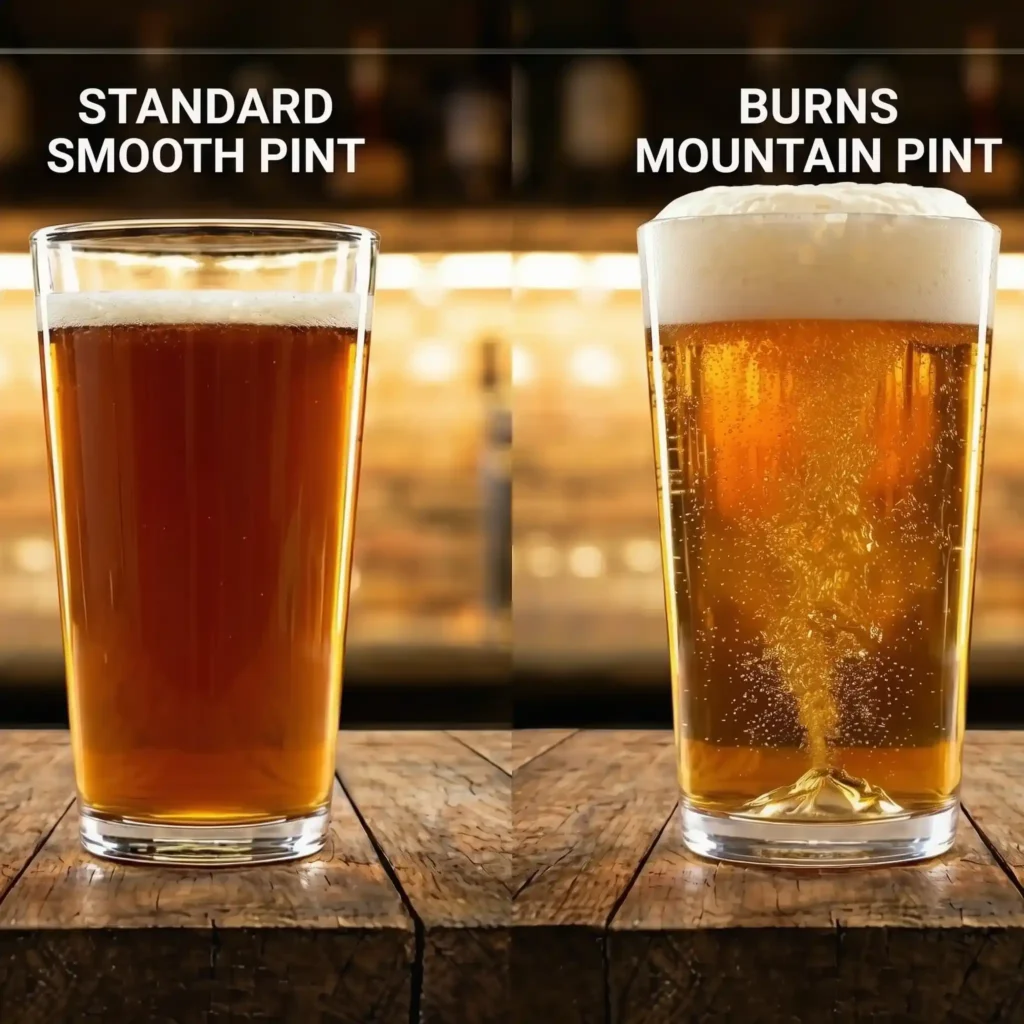
To understand why beer goes flat, you have to understand a physics concept called nucleation.
Standard commercial glass is microscopically smooth. While this makes it easy to wash, it creates a hostile environment for carbonation. CO2 needs an imperfection, a rough surface to grab onto in order to break out of liquid form and turn into a gas bubble.
Without these imperfections, the CO2 stays trapped in the liquid. It sits there, dormant. This means:
- No Bubbles: You lose the visual appeal of the rising stream.
- No Head: The foam cap dissolves quickly because it isn’t being replenished from below.
- No Aroma: Bubbles act as elevators, carrying hop oils to the surface. No bubbles means less smell, and less smell means less flavor.
A standard smooth glass is a passive vessel. It just holds the liquid. To fix “dead beer,” you need an active tool.
The Upgrade: How the Mountain Works
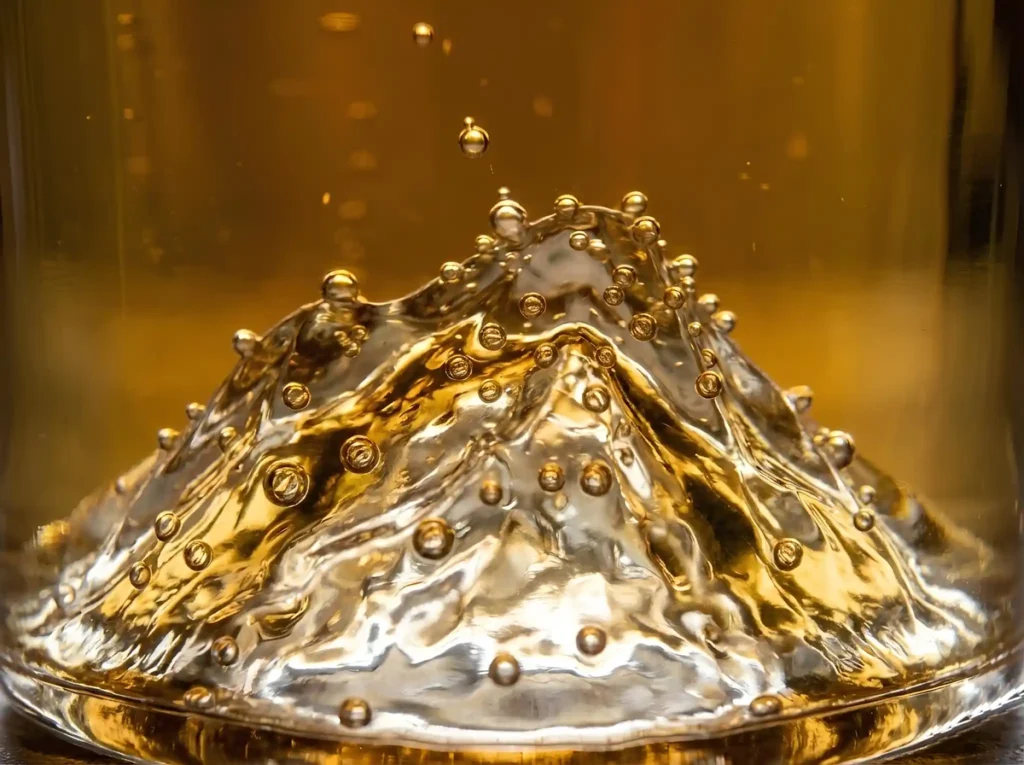
Brewers and glassmakers solve this through Nucleation Points—intentional imperfections added to the bottom of a glass to trigger the release of CO2. You might have seen this as laser etching or “widgets” in cans.
We took a structural approach. Our Mountain Nucleated Pints feature a custom-molded 3D mountain range rising from the base.
This isn’t just for looks. We engineered this topography to act as a physical “carbonation engine.”
- The Trigger: The liquid interacts with the rough peaks and ridges of the glass mountain.
- The Release: CO2 clings to the peaks, gathering until it releases as a bubble.
- The Stream: This creates a continuous column of bubbles rising from the “summit” to the surface.
It’s the best of both worlds: You get the classic durability of the American Shaker, but with a built-in feature that keeps your beer alive.
Beyond the Bubbles: When Shape Matters
The Mountain base fixes the carbonation, but for certain beers, you also need to think about rim geometry.
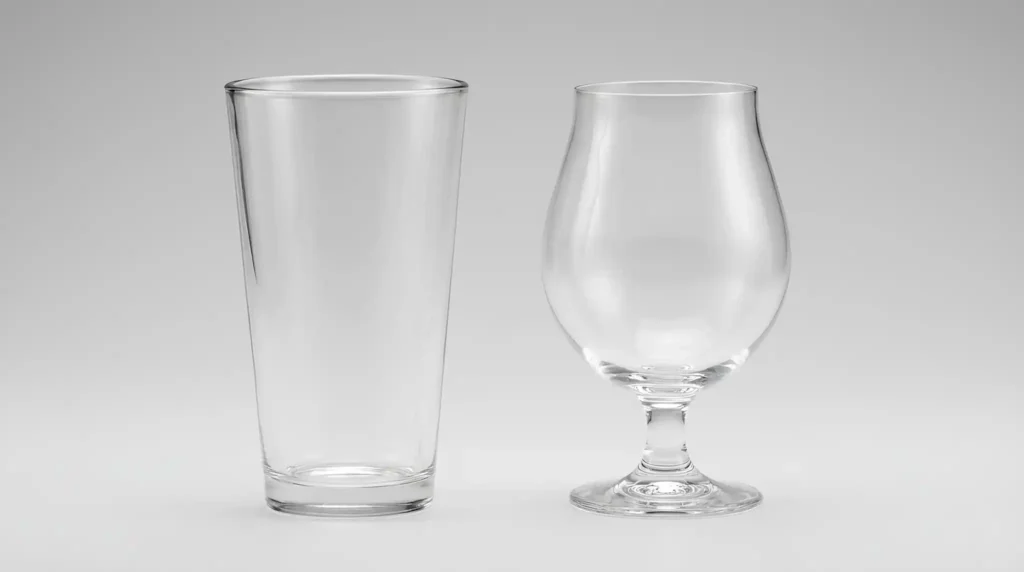
While a nucleated pint is perfect for Lagers, Pilsners, and Pale Ales, the rim shape plays a massive role in how you perceive flavor.
- The Shaker Rim: Great for “gulpability” and refreshing beers. It opens wide, delivering the beer to the back of the palate.
- The Tapered Rim (Tulip/IPA Glass): If you are drinking a double IPA or a heavy Stout, you want a glass that curves inward at the top. This acts like a funnel, trapping those volatile aromatics right under your nose.
The Glassware Cheat Sheet
Not sure which glass to grab? Here is a quick guide to matching the vessel to the brew:
| Beer Style | The “Pro” Choice | Why? |
| Casual / BBQ / Bulk | Standard Shaker Pint | The classic workhorse. Durable, stackable, and perfect for high-volume sessions where simplicity is key. |
| Everyday Craft | Mountain Nucleated Pint | The upgrade. Same classic look, but with the mountain engine for better head and aroma. |
| IPAs / Hazy Ales | IPA Glass or Tulip | Tapered rim concentrates the hop aroma. |
| Stouts / Porters | British Nonic Pint | Wide top allows the beer to warm slightly; inward rim traps roasted notes. |
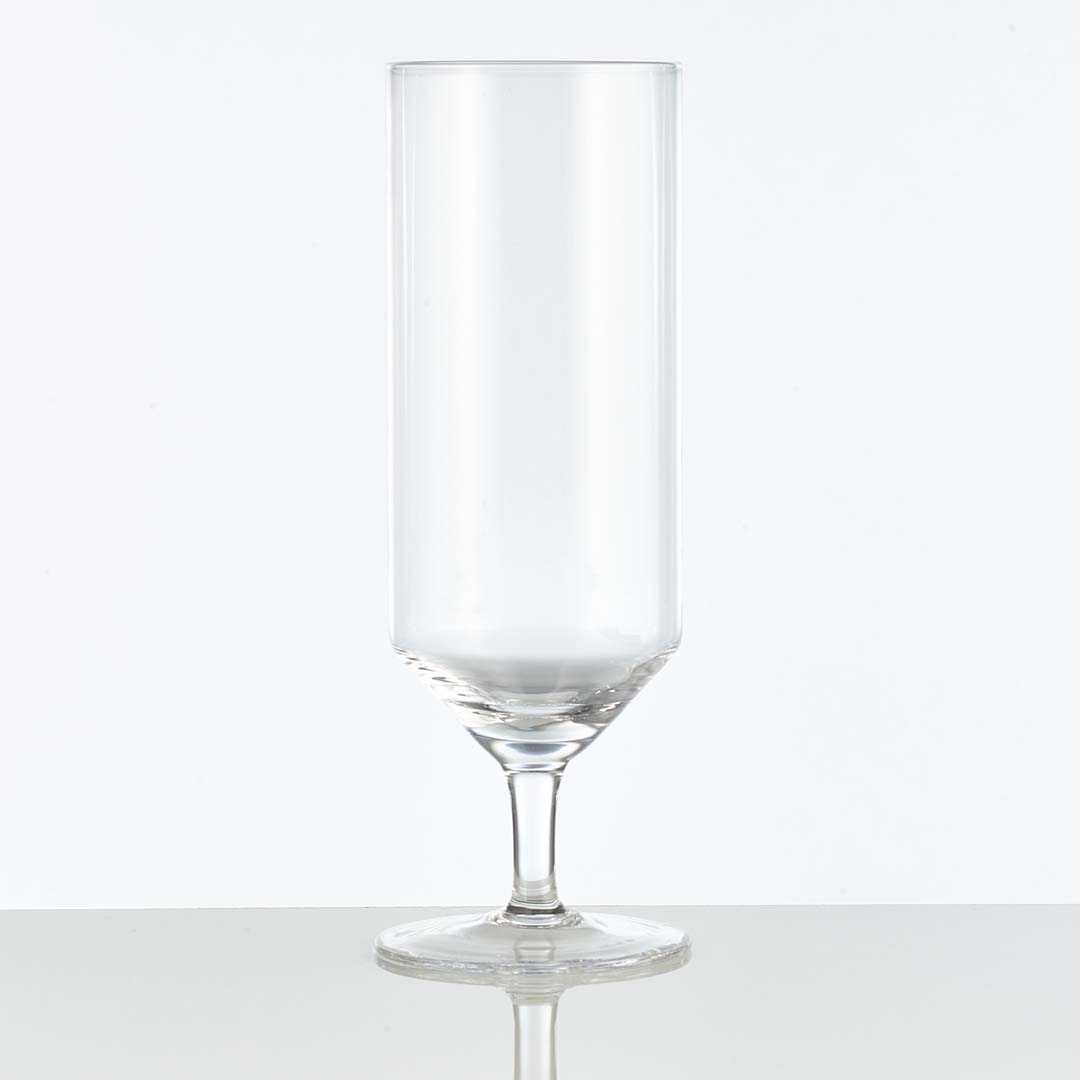
| Pilsners / Lagers | Stange or Tall Pilsner | Tall and slender to show off clarity and carbonation. |
A Note From Our Founder
“When I was developing products for brands like MillerCoors and Anheuser-Busch, we spent months analyzing rim angles and glass thickness. You don’t need a laboratory to enjoy a beer at home, but you do need the right tool. If you’re buying good beer, don’t let it die in a bad glass.”
— John Burns
The Verdict: Reliability vs. Performance
The standard shaker pint exists for a reason: it’s rugged, cost-effective, and gets the job done. If you’re drinking a crisp lawnmower beer, a standard pint is a solid choice.
But when you sit down to truly appreciate the nuance of a complex IPA or a craft Lager, your glass should be doing more than just holding liquid. It should be enhancing it.